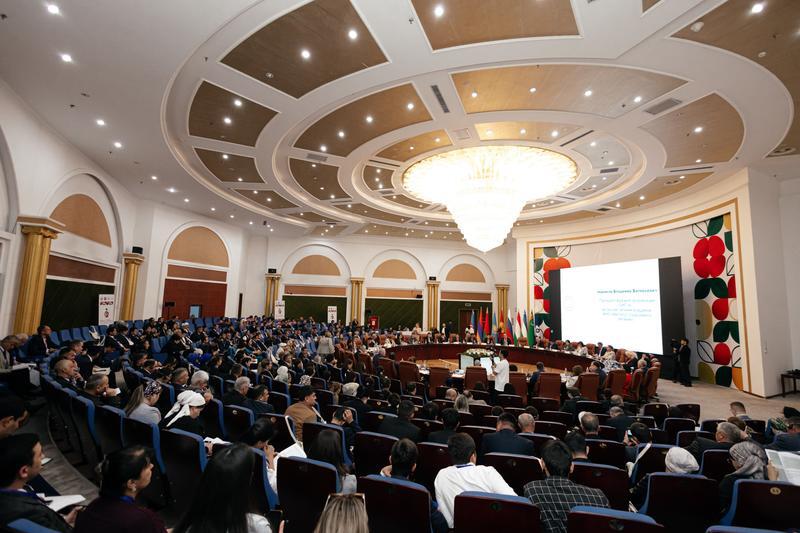
This flagship event for the Commonwealth of Independent States (CIS) brought together more than 300 participants, including representatives of Ministries of Health and Education, international organizations such as the UN World Food Programme, school catering operators, parent associations, and leading experts.
The Forum was organized by the Ministry of Health and Social Protection and the Ministry of Education and Science of the Republic of Tajikistan, with support from the CIS Executive Committee, the UN World Food Programme, and the Social and Industrial Foodservice Institute (SIFI), which acts as the CIS Basic Organization for School Feeding. Over three days, delegations from Armenia, Azerbaijan, Belarus, Kyrgyzstan, Tajikistan, Turkmenistan, and Russia presented their achievements in child nutrition, exchanged best national practices, shared experience in involving parents in the process, and presented projects that promote healthy eating habits among the population.
The CIS Executive Committee was represented by Denis Trefilov, Deputy Secretary General. He emphasized that high-quality school meals are “not only a social obligation of states, but also a direct investment in children’s health, intellectual development, and ultimately the future of our countries.”
The Forum was organized by the Ministry of Health and Social Protection and the Ministry of Education and Science of the Republic of Tajikistan, with support from the CIS Executive Committee, the UN World Food Programme, and the Social and Industrial Foodservice Institute (SIFI), which acts as the CIS Basic Organization for School Feeding. Over three days, delegations from Armenia, Azerbaijan, Belarus, Kyrgyzstan, Tajikistan, Turkmenistan, and Russia presented their achievements in child nutrition, exchanged best national practices, shared experience in involving parents in the process, and presented projects that promote healthy eating habits among the population.
The CIS Executive Committee was represented by Denis Trefilov, Deputy Secretary General. He emphasized that high-quality school meals are “not only a social obligation of states, but also a direct investment in children’s health, intellectual development, and ultimately the future of our countries.”
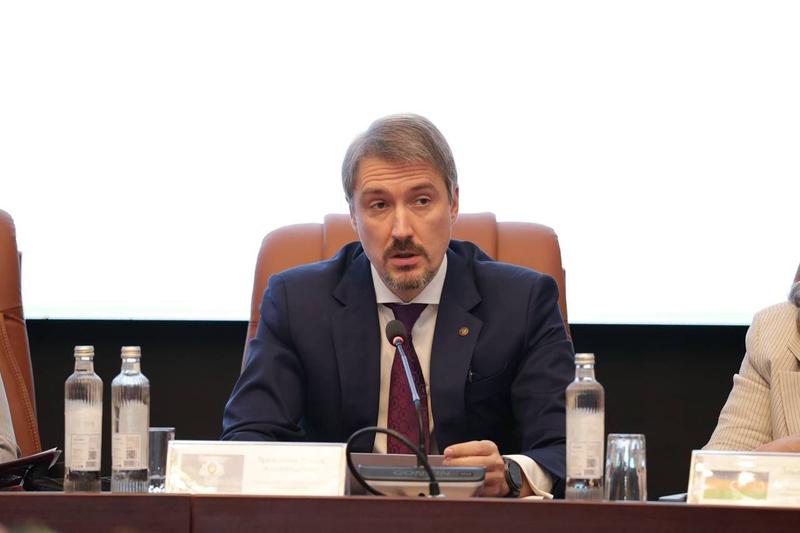
Denis Trefilov
“In April this year, the foreign ministers of the CIS member states gave new momentum to this initiative, granting the Social and Industrial Foodservice Institute of the Russian Federation the status of the CIS Basic Organization for School Feeding. We now have a common center of expertise, a platform where all CIS member-states can share best practices and modern technologies,” Trefilov added.
Zulfiya Abdusamatzoda, Deputy Minister of Health and Social Protection of the Republic of Tajikistan, briefed participants on the ministry’s priorities in organizing school meals, reflecting the overall direction of development:
“In the coming years, the Ministry will continue implementing the National School Feeding Programme, with a particular focus on preventing diet-related diseases and building healthy lifestyle skills among children. It is essential to strengthen awareness-raising efforts among parents and teachers so that school meals are seen as an integral part of child health policy. Our task is to build a sustainable, safe, and evidence-based system that will safeguard the health of future generations.”
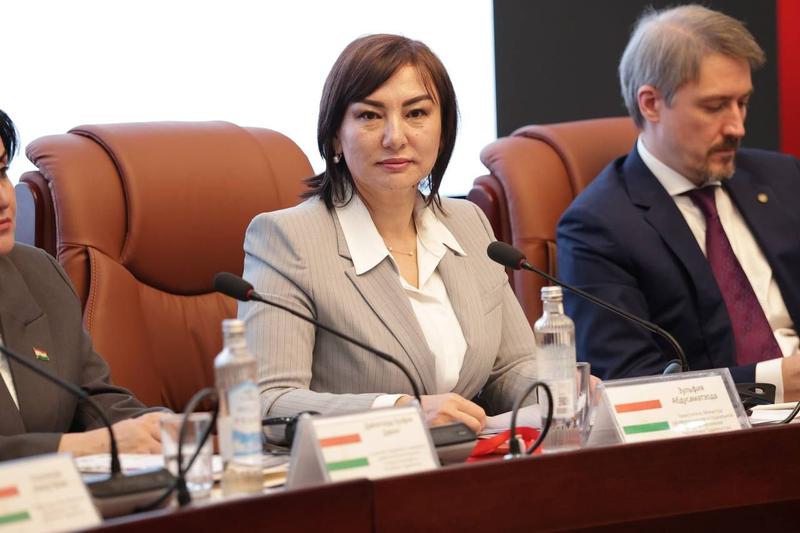
Zulfiya Abdusamatzoda
Badriddin Muzaffarzoda, Deputy Minister of Education and Science of the Republic of Tajikistan, outlined the concrete steps required to implement the National Programme:
“We must continue modernizing school infrastructure, especially in rural areas, strengthen material resources, and expand the participation of local food producers. Special attention must and will be paid to upgrading the skills of school staff and administrators, introducing modern monitoring and reporting systems, and integrating nutrition topics into the educational process.”
The Russian delegation to the International School Feeding Forum included: Semen Grigoryev, Ambassador Extraordinary and Plenipotentiary of the Russian Federation to the Republic of Tajikistan; Tatiana Butskaya, First Deputy Chair at the Russian State Duma Committee on Family Protection, Fatherhood, Motherhood and Childhood; Alexey Shlyonov, Deputy Director of the Department for Digital Transformation and Priority Projects; and Vladimir Chernigov, President of the Social and Industrial Foodservice Institute (the CIS Basic Organization for School Feeding).
In his address to the participants of the 2nd International CIS School Feeding Forum, Sergey Kravtsov, Minister of Education of the Russian Federation, emphasized that school feeding is one of the most important factors influencing the quality of education.
In his address to the participants of the 2nd International CIS School Feeding Forum, Sergey Kravtsov, Minister of Education of the Russian Federation, emphasized that school feeding is one of the most important factors influencing the quality of education.
“I firmly believe that ensuring high-quality, balanced, and affordable school meals must be a priority for every education system across the CIS,” the Minister noted.
Kravtsov also stated: “We stand ready to work closely with our international partners and support initiatives and projects aimed at improving the provision of hot meals for primary school children, ensuring nutritious diets for upper-grade students, and introducing modern food preparation technologies in school canteens.”
Vladimir Chernigov, President of the Social and Industrial Foodservice Institute, stressed that nothing is more important than ensuring that every child receives proper nutrition.
Vladimir Chernigov, President of the Social and Industrial Foodservice Institute, stressed that nothing is more important than ensuring that every child receives proper nutrition.
“Today, we are joined by those who oversee this work on a national scale. I fully support everyone who understands that what may seem like a simple act — feeding a child — is in fact a major investment in human capital, in the nation’s capital, and in the future of every country. I am confident that we will achieve all the goals we have set.”
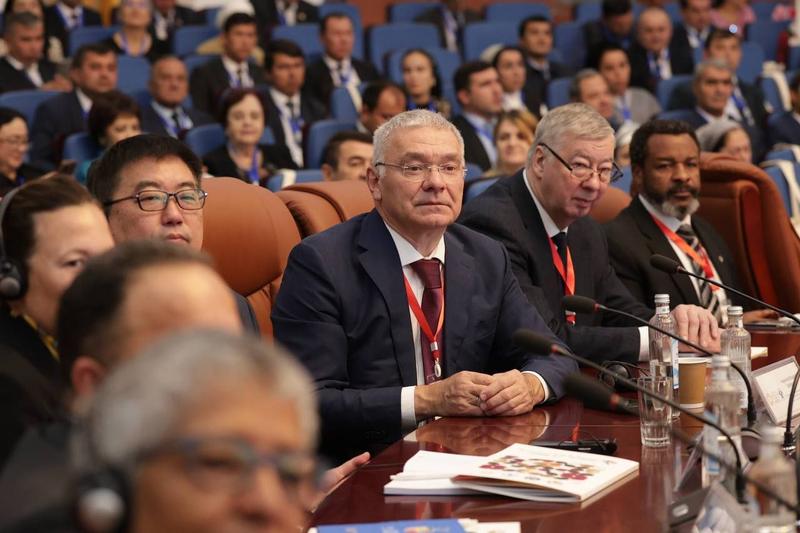
Vladimir Chernigov
The expert program of the 2nd International CIS School Feeding Forum in Dushanbe was held in the format of a scientific-practical conference and a series of panel sessions under the theme: “Education, healthcare, family as a unified approach to advancing school feeding.” Participants presented projects in child nutrition, public health, and parental involvement in promoting healthy lifestyles among the younger generation.
The panel discussion “Outcomes and prospects for the School Feeding Programme” served as an active platform for exchanging experience among representatives of national ministries, regional education authorities, international organizations, and school catering operators.
Sergey Uglov, Vice President of the Social and Industrial Foodservice Institute, outlined approaches to developing school canteen modernization programs based on a thorough assessment of each school’s existing infrastructure and equipment.
The panel discussion “Outcomes and prospects for the School Feeding Programme” served as an active platform for exchanging experience among representatives of national ministries, regional education authorities, international organizations, and school catering operators.
Sergey Uglov, Vice President of the Social and Industrial Foodservice Institute, outlined approaches to developing school canteen modernization programs based on a thorough assessment of each school’s existing infrastructure and equipment.
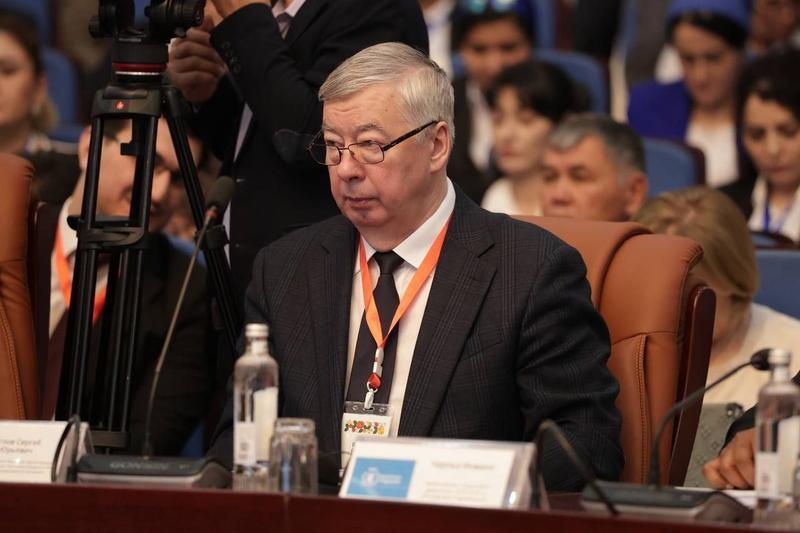
Sergey Uglov
Alena Mironenko, Vice President of the CIS Basic Organization for School Feeding and Head of the Social Nutrition Department of St. Petersburg, presented a centralized model that ensures both high quality and full transparency of processes.
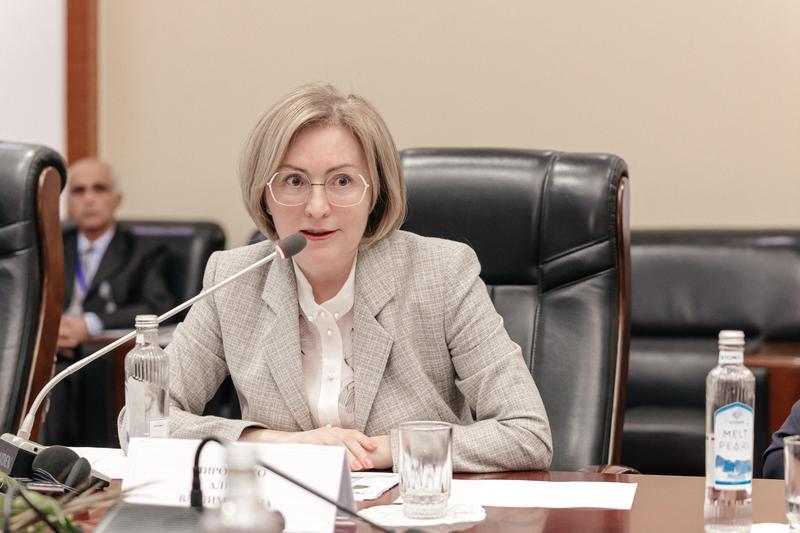
Alena Mironenko
The exchange of regional practices began with a presentation by Elena Parfenova, Deputy Head of the Volgograd Education Department, who shared the outcomes of a major reform: the successful transition of all 322 city schools to outsourced meal services.
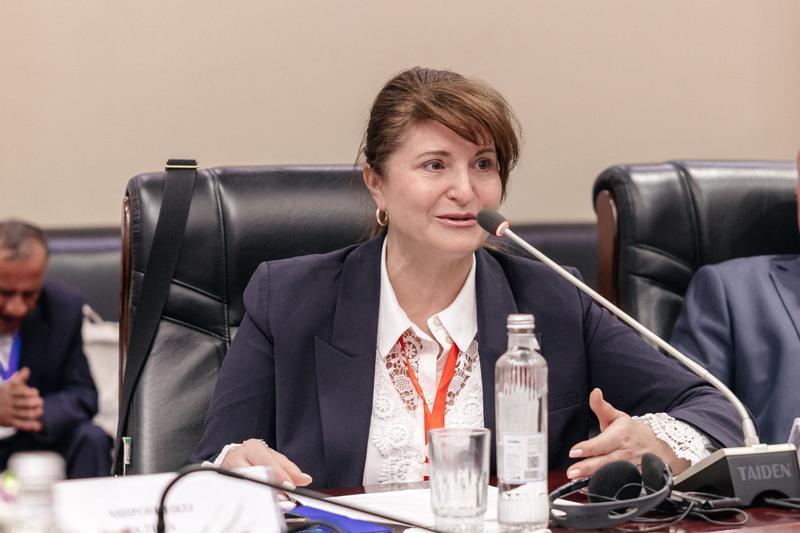
Elena Parfenova
Aida Aftandilova, School Feeding Programme Specialist with the UN World Food Programme in the Kyrgyz Republic, further enriched the discussion with practical case studies on logistics, operational management, and the introduction of sustainable solutions.
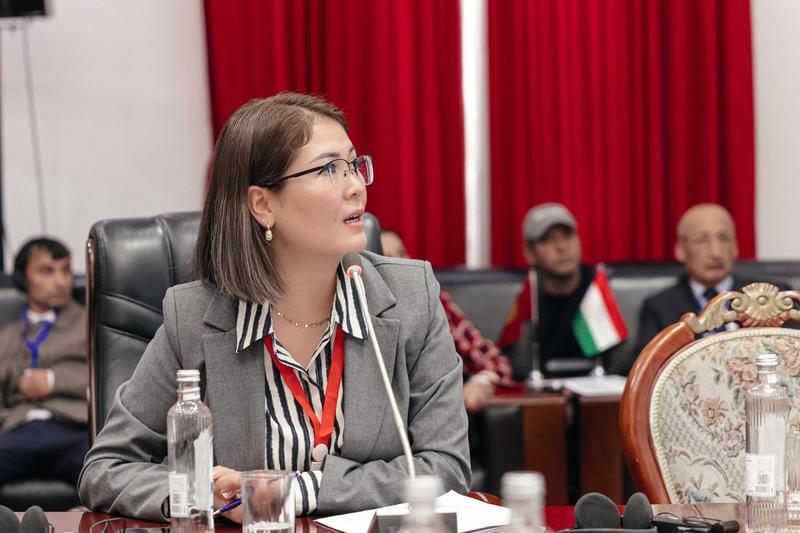
Aida Aftandilova
Satenik Mkrtchyan, Director of Armenia’s School Feeding and Child Welfare Agency, presented the agency’s systematic and evidence-based approach to the work of its team of nutritionists.
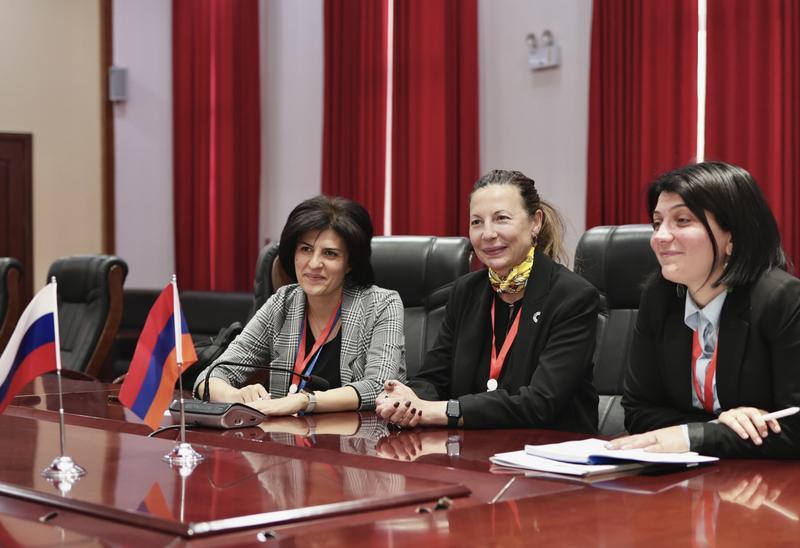
Satenik Mkrtchyan (pictured on the right)
During the session “The impact of school meals on national health and development,” representatives of health ministries, medical experts, and researchers shared study findings and provided recommendations on product selection and designing a balanced daily diet. Particular attention was given to strengthening children’s immunity from the earliest days of life. Participants examined breastfeeding from a scientific perspective, emphasizing its long-term benefits for child health.
Tatiana Butskaya expanded on this theme in her remarks. She highlighted statistical evidence showing that significantly more children are healthy in early preschool years compared to adolescents in their final school grades, a trend she attributed to declining parental oversight of older children’s diets.
Tatiana Butskaya expanded on this theme in her remarks. She highlighted statistical evidence showing that significantly more children are healthy in early preschool years compared to adolescents in their final school grades, a trend she attributed to declining parental oversight of older children’s diets.
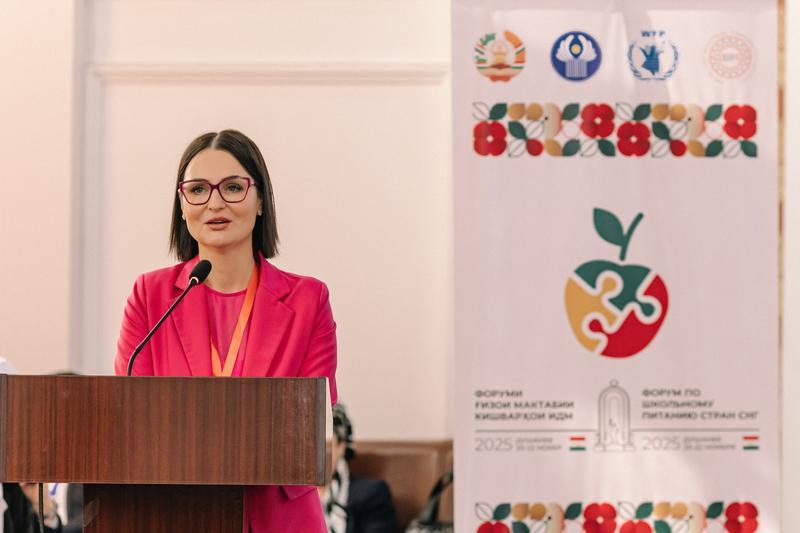
Tatiana Butskaya
During the session “Parents and social protection,” participants unanimously agreed that the key to improving the quality of school breakfasts and lunches lies in parental involvement and healthy eating habits cultivated at home. They also underscored the need to establish a clear regulatory framework for parental contributions, including rules for their use and mandatory public reporting by schools. Such measures, they stressed, are essential for strengthening family trust and ensuring a transparent, reliable, and sustainable system.
Natalia Vasenina, Regional Coordinator of the Parents’ Public Council for Monitoring School Feeding under the All-Russia People’s Front in the Republic of Mordovia, emphasized the need for a systemic approach. This includes integrating lessons on healthy eating and lifestyle into the school curriculum, training school administrators in modern food service management, and conducting regular awareness-raising activities for parents. These measures, she noted, will help build lasting healthy habits and strengthen the competence of all stakeholders.
Natalia Vasenina, Regional Coordinator of the Parents’ Public Council for Monitoring School Feeding under the All-Russia People’s Front in the Republic of Mordovia, emphasized the need for a systemic approach. This includes integrating lessons on healthy eating and lifestyle into the school curriculum, training school administrators in modern food service management, and conducting regular awareness-raising activities for parents. These measures, she noted, will help build lasting healthy habits and strengthen the competence of all stakeholders.
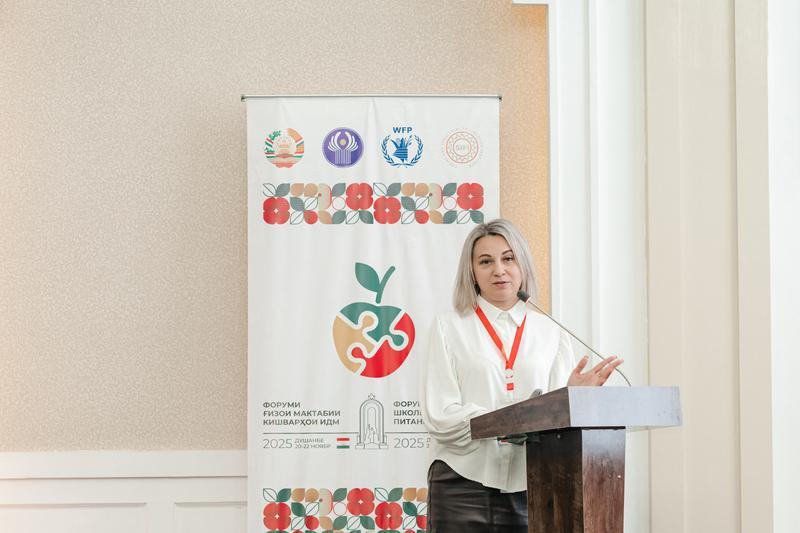
Natalia Vasenina
In addition, school experience has shown that using school land plots and sourcing local products helps diversify menus while reducing costs. Youth initiatives presented during the session also demonstrated that teenagers can be powerful advocates for healthy eating among their peers.
Following the expert sessions, delegates took part in field visits to review the results of Tajikistan’s National School Feeding Programme. They visited schools in Dushanbe and Nurek, where representatives of relevant ministries from across the Commonwealth examined school feeding processes in both urban and rural settings. As part of a UN World Food Programme project underway in the country, the delegation also toured a school greenhouse.
Following the expert sessions, delegates took part in field visits to review the results of Tajikistan’s National School Feeding Programme. They visited schools in Dushanbe and Nurek, where representatives of relevant ministries from across the Commonwealth examined school feeding processes in both urban and rural settings. As part of a UN World Food Programme project underway in the country, the delegation also toured a school greenhouse.
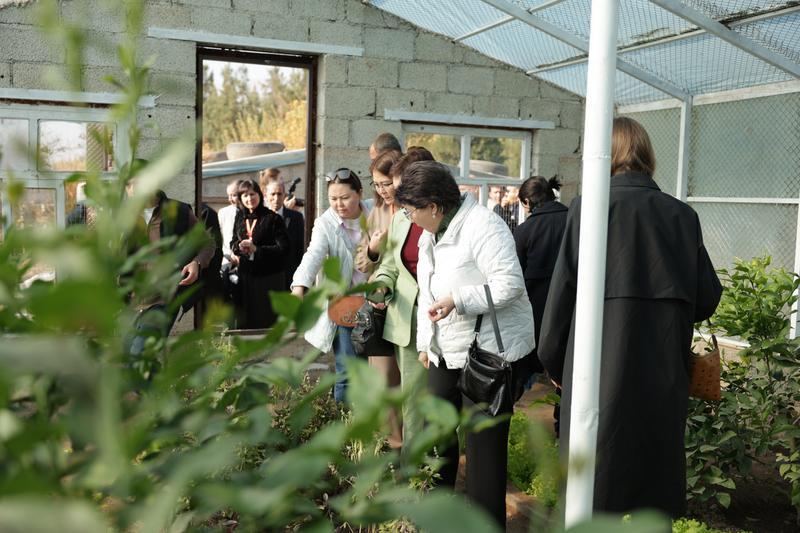
Greenhouse at school No. 4 in Nurek
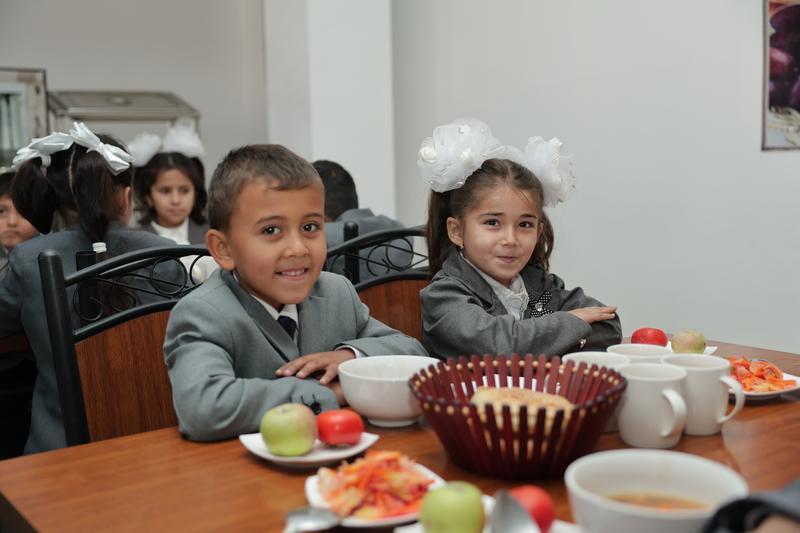
School canteen
To conclude the visit, participants of the 2nd CIS International Forum on School Feeding, led by Bad riddin Muzafarzoda, Deputy Minister of Education and Science of Tajikistan, planted apple and pear trees labeled with the names of their respective countries. This symbolic “Friendship Garden” was established on the grounds of the school in Nurek.
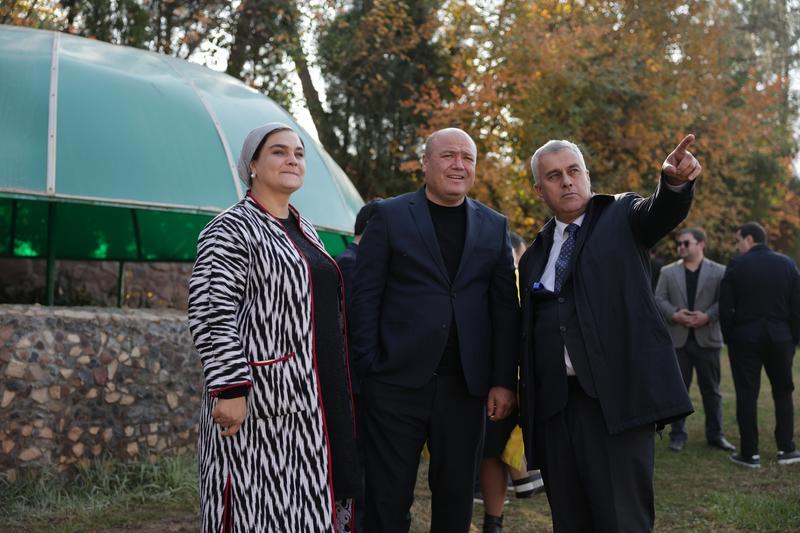
Badriddin Muzaffarzoda (in the center of the photo)
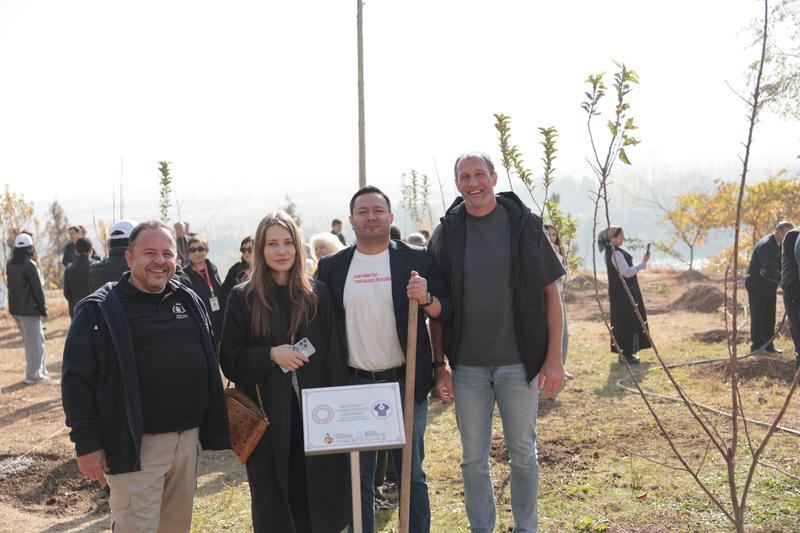
Pear tree of the CIS Basic Organization for School Feeding, SIFI
To conclude the Forum, participants agreed that the joint work carried out over the three days has set clear priorities for the further development of national school feeding initiatives. The decisions adopted reaffirmed the crucial role of international cooperation and knowledge exchange. Moreover, the cooperation agreements and memoranda signed during bilateral meetings between CIS country delegations and the CIS Basic Organization for School Feeding, SIFI, will help strengthen technical expertise and support the effective implementation of future plans.